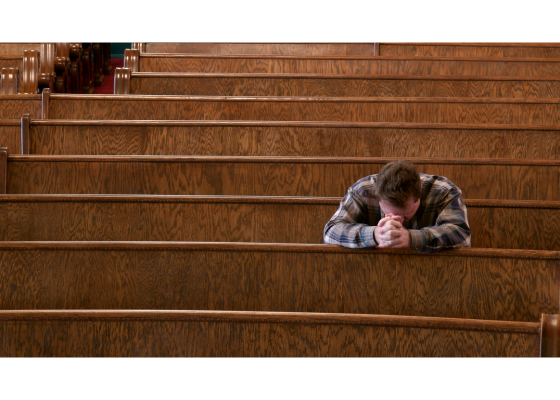
As Catholics, having the right disposition for the reception of the sacraments is not just a good idea. It is actually necessary in order to receive the grace of that sacrament worthily. Not much has been said about this in catechetical instruction for quite some time, but the teaching of the Church on this has not changed. Every sacrament we receive offers us sanctifying grace – that is, an increase in holiness. But, in order for that grace to take effect, we have to receive that sacrament with the right disposition.
Having the right disposition requires two things: First, that we are not aware of any mortal sin in our life that needs to be confessed, and secondly, that we are of the right frame of mind to fully participate in the sacrament we are in that moment receiving. So, for example, to receive Holy Communion with the knowledge of serious sin in our life that has not been confessed is called a sacrilege – a desecration of the sacrament. Not only does the grace of the Eucharist have no effect in our lives, now we also need to confess the act of receiving Holy Communion unworthily.
Now let’s say that we are in a state of grace, free from serious sin when we approach the altar to receive Holy Communion, but that our minds and hearts are somewhere else. We simply are not of the proper disposition to take Holy Communion. The Church teaches that it would be proper to remain in our pew and make a spiritual communion, expressing to the Lord our failure to prepare for such a profound encounter with him and then offering an act of contrition and expressing our desire for Holy Communion. Rather than simply going forward to receive Holy Communion because the people in my row are moving, remaining in the pew might be an experience that helps us be better disposed in the future to receive our Lord.
This may come as a shock to some, but it is basic sacramental theology. We have become so routine in the way we receive Holy Communion that having the proper disposition to do so is something many people may have never been taught. The grace of a sincere and honest confession enables the graces, until now “on hold,” to be activated in our lives. When we become more intentional about what we are doing when we receive the sacraments, the more effective will be the graces that have not yet taken effect in our lives.
Another example of this is the proper disposition for the sacrament of reconciliation. There are four parts to the proper reception of the sacrament of penance: contrition, confession, absolution and satisfaction. The most important of these is that we have true contrition for our sins. This means that we are truly sorry for them. Some people confess sins they have committed without having true sorrow for them. Guilt – the knowledge of our sins does not constitute sorrow. True contrition is both sorrow for the sin and firm purpose of amendment – to avoid that sin going forward. It’s a simple matter of logic that we cannot be forgiven for something for which we are not sorry.
At a reception or a potluck dinner or at a banquet, when people offer me something that I would truly enjoy eating, I often politely decline by calling it “confession material,” saying that eating it would be something that I would need to confess. But the problem is, to confess it, I need to be sorry for something that I would really enjoy. How many times have we confessed something out of guilt but not with true contrition? The other part of the sacrament of penance is to make a thorough confession – that is, a good examination of our conscience and an honest and humble admission of all that we are aware of, not just “the big ones” as some people have in the past been encouraged to do.
Having the right disposition to receive the sacraments requires that we would be more conscious of our daily disposition before God. In the penitential rite at Mass, we admit that we have sinned, “in my thoughts and in my words, in what I have done and what I have failed to do.” A regular (daily) examination of our lives enables us to be more cognizant of our disposition before the Lord in a continuous way. We would begin to see patterns in our thoughts, words, deeds and omissions. Being more aware of our patterns helps us be less routine and more intentional about the practice of our faith.
As we become more self-aware and intentional about our disposition when receiving the sacraments, we soon notice a more meaningful experience of God in our lives. Why? Because our worthy disposition of the sacraments allows the sacramental grace proper to each sacrament and the sanctifying grace therein to flow generously in our lives. During this Lenten season, let us become more intentional about the practice of our faith, starting with what we are thinking about when we say our prayers, so that sanctifying grace in our lives may transform us to be more like Christ, our Lord.