Thankfully, I no longer live in a house with anyone else and risk disturbing their mental equilibrium by my own idiosyncrasies, or them disturbing mine! For a short three years I was assigned at the former German national parish in Omaha. In the parish hall kitchen, each of the cabinets in the kitchen had the same note posted on the door that noted about 8 things, such as: if you empty it, fill it; if you open it, close it; if you borrow it, return it; if you break it, fix it, etc. I must admit, I liked that! Over the years I have discovered that married people are also irritated by the patterns or habits of their spouse. That’s no surprise. We are who we are.
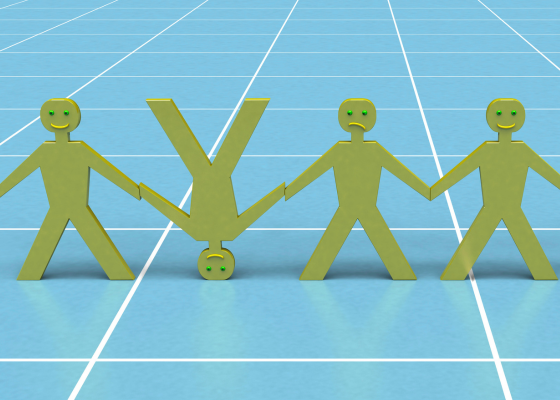
That we have differences in the way we do things is to be expected, but that these differences can be such a “big deal” to someone else is what is often surprising. Yet what is also surprising is that we ourselves have things that are a “big deal” to us, without realizing it. It’s striking how people whom we love dearly can also annoy us in very simple ways. For example, I never try to load someone else’s dishwasher. That’s one of those simple things that we all do our own way, and I have found that it is better left undone than risk upsetting someone even though I was trying to be “helpful.”
I remember when I was a seminarian in Rome and was traveling with a classmate of mine by train throughout Europe on a “Eurail Pass” in the summer of 1981. There was a lady in her 80’s, from Canada, who appeared to be traveling all by herself. When we asked if she was traveling with anyone else, she said, “No, I travel alone and keep my friends.” She then explained that she had friends who traveled together and after the trip their friendship was over. Also, I am reminded of the pastor at my second assignment. God rest his soul, but he was such an eccentric character! People would ask him, “How are you doing?” And he would reply, “I’m just provoking others to heaven!” I often thought, “you’re provoking me, alright, but I don’t think it is actually sanctifying me.”
So, does it really matter if simple things are not done by others the way we would do them? Why is it such a big deal if someone keeps their toaster on the countertop to the left of the stove instead of the right, or on the countertop instead of being concealed below the counter? Does it really matter if the lawn is mowed parallel to the driveway instead of at a 45-degree angle to the driveway? Are we then one big ball of frustration the rest of the day if our favorite scent of linen sheets for the clothes dryer are out of stock at the store? We certainly find out more directly how set we are in our ways when someone else comes along and approaches things some other way.
The way I see it (even as I am trying to overcome this tendency myself), is that all of this is a practice run for the day when the Lord calls us home, whenever and in whatever way HE desires. On that day we will have to accept his way of drawing us out of this world and welcoming us home to his eternal embrace. So, if we can practice letting these little things go now whenever they bother us, then stepping from this world into purgatory and beyond will go so much more smoothly. If we can admit to ourselves that something simple irks us, and that’s okay, then the happier we will be now and thus more prepared for the end of our earthly idiosyncrasies.
So, what if another person peals a banana from the stem instead of the tip? And what if the coffee cups are not in the cupboard directly above the coffee maker? And what if the last person to use the dish soap left it by the backsplash on the counter instead of down underneath the sink? What we might prefer seems like the “right way”, but it isn’t the “only way.” Because I prefer Gothic church architecture, I never imagined I would be so captivated by the Basilica de la Sagrada Familia in Barcelona. I thought the unique style of Antonio Gaudi’ was intriguing in pictures, but experiencing it personally was another matter. It was an encounter like I had never imagined. I wouldn’t say I was converted from Gothic church architecture, but I gained a new appreciation for Gaudi’ because I experienced it first-hand, and it affected me profoundly.
In other words, the key to a richer and more peaceful life on this earth is to accept some of these things that annoy us instead of getting all bent out of shape about them. The classic biblical example of this is the passage where Jesus meets the disciples as they were coming ashore from fishing. They had been fishing all night and had caught nothing. Then Jesus, a carpenter’s son, said to these experienced fishermen, “Master, we have worked hard all night and have caught nothing, but at your command I will lower the nets.” And then the gospel says, “When they had done this, they caught a great number of fish and their nets were tearing.” In other words, there can be great blessings and beautiful surprises when we stop insisting things have to be “our way.”
It may not be our first response to appreciate the differences we see in others, but opening our hearts to what the Lord can do if we surrender to the fascinating but irksome ways of others might also give us an appreciation for the fact that each of us in God’s eyes is precious, unique, gifted and graced, including the one we see in the mirror each morning!