In the Gospel this past Sunday, Peter asks Jesus this question: “Lord, if my brother sins against me, how often must I forgive? As many as seven times?” Jesus answered, “I say to you, not seven times but seventy-seven times.” Really? To forgive a person for some wrong they have done is no easy matter. But to forgive them seven times, or seventy times seven times just seems foolish. Certainly, if someone apologizes for some offense of theirs, we might cautiously forgive them. However, forgetting it is another matter. But should they then wrong us again, we might judge them to be insincere and hold it against them. Furthermore, we may go so far as to share our view of the story with others to gain support or seek revenge by assassinating their character.
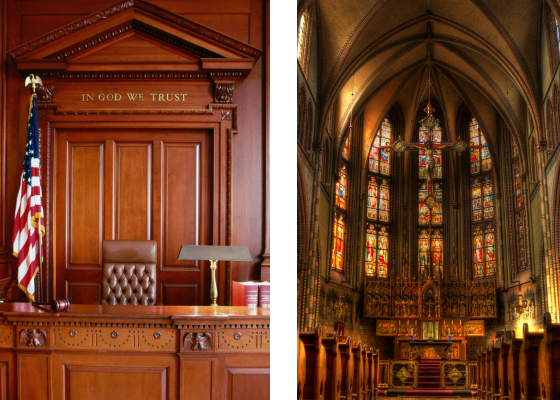
Have you noticed in recent years how many billboards and advertisements there are for personal injury lawyers? The intended message is obvious: someone must pay for what has happened to you. Now, to be sure, there are circumstances in which some liability must be assigned, especially when there is some apparent fault in the situation. But I would submit that ours has become an overly litigious society. The common advice from those around us is to “lawyer-up” when something happens. It seems that there is a certain “liability” for almost anything these days. Just to drive retired parishioners to church on Sunday has some inherent risks.
The opposite of this would be what we heard in the Responsorial Psalm (Ps.103) on Sunday: “The Lord is kind and merciful, slow to anger, and rich in compassion.” Our God forgives us seventy times seven times. No matter what sinful habits might plague us, he never tires of forgiving us. Whatever our struggles might be with habitual sin, he just wants us to keep asking for his mercy. There is something healing and hopeful about the endless mercy that is ours in Christ. The culture says sue them and the gospel says forgive them. The gospel is truly challenging if we want to live an authentic Christian life.
Recall these words from the first reading from the Book of Sirach: “Wrath and anger are hateful things, yet the sinner hugs them tight. The vengeful will suffer the LORD’s vengeance, for he remembers their sins in detail. Forgive your neighbor’s injustice; then when you pray, your own sins will be forgiven. Could anyone nourish anger against another and expect healing from the LORD? Could anyone refuse mercy to another like himself, can he seek pardon for his own sins? (Sir 27: 30, 28:1-4) The advice here points to what I call a sacramental world view. Let me explain.
There is another hidden message in the act of bestowing forgiveness and mercy. When we forgive others, this act of mercy points to someone else’s unconditional love and mercy when he died on the cross for them. Sacramental signs point to invisible realities. So, for example, when husbands and wives forgive each other for various faults and injuries, they become a sacramental (visible) sign of Christ’s love. For St. Paul says, “While we were yet sinners, Christ died for us.” (Romans 5:8) Spouses make visible and real the love of Jesus who went to the cross and died for their sins by means of their own love, mercy and forgiveness. The power of mercy and forgiveness lies in its potential to remind the world that there is something greater than revenge. As we note in 1 Peter 4:8, “Above all, love one another deeply, for love covers a multitude of sins.”
The first challenge lies in developing a sacramental worldview of life. The next challenge is to live by that worldview each day. So, choose any virtue, like patience, for example. Choosing to be patient with others because of the Lord’s infinite patience and kindness with us in our many faults and weaknesses begins what I call “the ripple effect.” Noticing how patient and kind the Lord is with us, we in turn choose to live that way with those around us. The more we “ripple out” what Jesus has done for us, the more clearly we make Jesus visible in the world. Simply put, the more counter-cultural we are, the more people come to experience a sacramental view of things – making visible by the way we live the life, death and resurrection of Jesus.
And this is our vocation as disciples of Jesus: to make him known to all! Though Jesus is no longer in our streets or in public places, he is encountered in us who follow him, if we conduct ourselves as he has taught us. We bear witness to our life in Christ by the Christ-like way we live each day. In this way, we show the world there is so much more to experience through God’s love and mercy. So how often must we forgive one another? As often as the Lord forgives us – so that more people will come to know the mercy and forgiveness of God in a world that is forgetting what the Lord has taught us.